
Embark on a journey to discover the art of managing expense reports effortlessly after a business trip. Unravel the intricacies of organizing receipts, utilizing tracking tools, and ensuring policy adherence for seamless reporting.
Explore the realms of expense management post-travel and unlock the secrets to efficient and hassle-free reporting.
Introduction to Expense Reports Management After Business Travel
 Expense reports are detailed records of expenses incurred during business travel, including transportation, accommodation, meals, and other related costs. These reports are crucial for businesses to track spending, ensure compliance with company policies, and facilitate reimbursement for employees.Efficient management of expense reports after business travel is essential to maintain financial transparency, monitor budget allocations, and uphold regulatory compliance. By promptly submitting and processing these reports, organizations can streamline their accounting processes, minimize errors, and make informed decisions based on accurate financial data.
Challenges Faced in Handling Expense Reports Post-Travel
- Receipt Management: Keeping track of receipts for all expenses incurred during travel can be cumbersome and time-consuming. Lost or misplaced receipts can lead to delays in reimbursement and potential discrepancies in financial records.
- Policy Adherence: Navigating through complex expense policies and guidelines set by the company can be challenging for employees, especially when it comes to categorizing expenses correctly and justifying certain costs.
- Currency Conversion: Dealing with multiple currencies during international travel can pose challenges in accurately converting expenses into the company's preferred currency, leading to discrepancies in financial reporting.
- Manual Data Entry: Inputting expense data manually into spreadsheets or accounting software is prone to errors, duplication, and inefficiencies, requiring additional time and effort to rectify.
- Approval Processes: Delays in obtaining approvals from managers or finance departments can hinder the timely submission and processing of expense reports, causing frustration for employees awaiting reimbursement.
Best Practices for Collecting Receipts and Invoices
When it comes to managing expense reports after business travel, collecting receipts and invoices is crucial for accurate reporting and reimbursement. Here are some best practices to help you streamline this process:Organize and Store Receipts During Travel
- Designate a specific place in your bag or wallet to store all receipts as soon as you receive them.
- Consider using a travel wallet or envelope to keep receipts separate and organized.
- Label each receipt with the date, purpose, and amount spent to easily identify them later.
Importance of Detailed Receipts for Expense Reporting
- Detailed receipts provide a clear breakdown of expenses, making it easier to categorize and report them accurately.
- They serve as proof of purchase and help validate the legitimacy of the expenses incurred during travel.
- Avoiding missing or unclear receipts can prevent delays in reimbursement and ensure compliance with company policies.
Digitizing Paper Receipts for Easy Access
- Use mobile apps or scanning devices to digitize paper receipts and store them electronically.
- Organize digital receipts in folders or cloud storage for easy access and retrieval when needed.
- Consider using expense management software that allows you to upload and categorize receipts directly from your phone.
Utilizing Expense Tracking Tools and Software
Managing expense reports can be made much more efficient with the use of specialized tools and software designed to streamline the process. These digital solutions offer a range of benefits that can help businesses save time and resources.
Popular Expense Tracking Tools for Businesses
- Expensify: Known for its user-friendly interface and robust features, Expensify allows users to easily capture receipts, track mileage, and generate detailed reports.
- Concur: A popular choice for large enterprises, Concur offers advanced integration capabilities with other business software and customizable reporting options.
- Zoho Expense: Ideal for small to medium-sized businesses, Zoho Expense provides a simple and intuitive platform for managing expenses on-the-go.
Benefits of Using Digital Software for Expense Reports
- Efficiency: Digital software automates the process of capturing and categorizing expenses, reducing manual data entry and human error.
- Accuracy: By digitizing receipts and invoices, software helps ensure that all expenses are accurately recorded and accounted for.
- Compliance: Many expense tracking tools come with built-in compliance features that help businesses adhere to company policies and regulatory requirements.
Comparison of Expense Tracking Software Options
| Software | Features | User-Friendliness | Integration |
|---|---|---|---|
| Expensify | Receipt scanning, mileage tracking, real-time reporting | Intuitive interface with mobile app | Integration with accounting software |
| Concur | Customizable reporting, policy enforcement, analytics | Robust features may require training | Integration with ERP systems |
| Zoho Expense | Expense categorization, multi-currency support, approval workflows | Simple and straightforward design | Integration with Zoho CRM and Books |
Streamlining the Expense Reporting Process
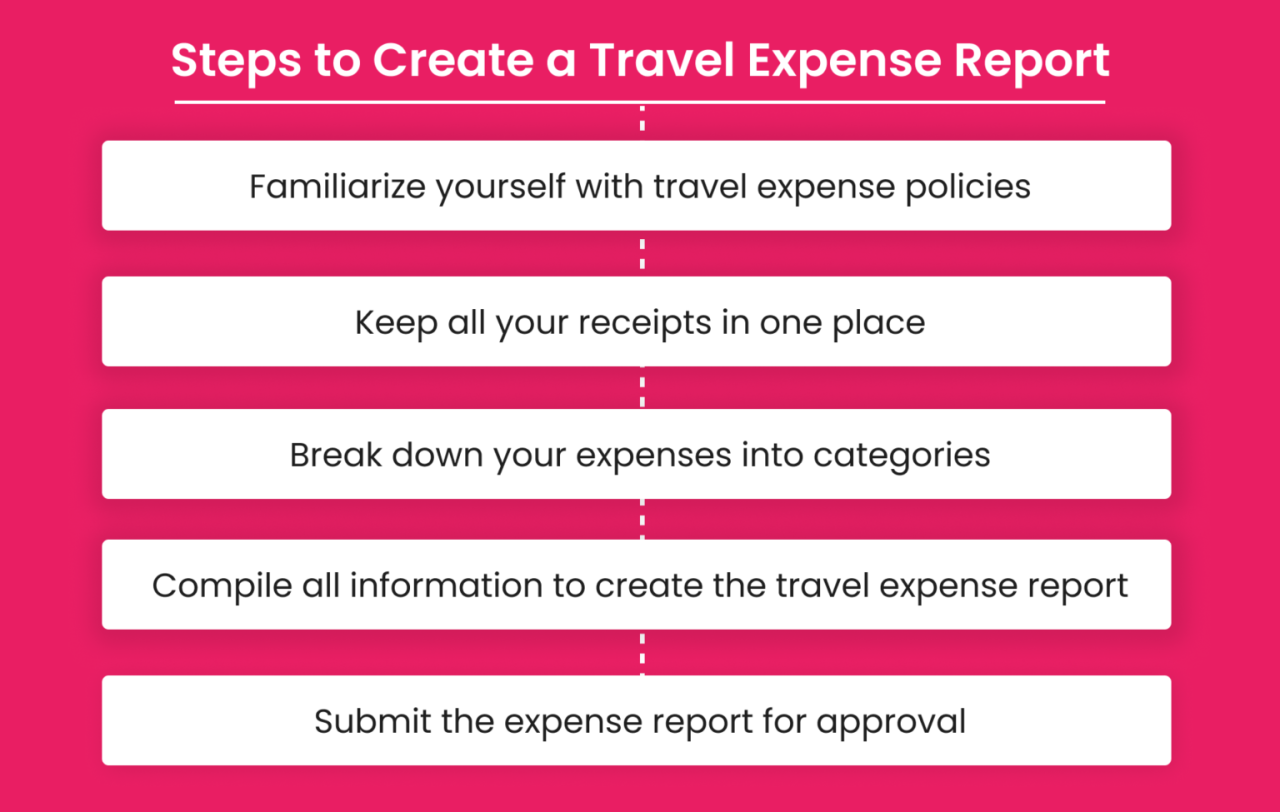
Effective expense report management involves streamlining the process to ensure efficiency and accuracy. By categorizing expenses effectively, automating report generation, and setting up approval workflows, organizations can save time and resources while maintaining control over expensesCategorizing Expenses
Properly categorizing expenses is essential for accurate reporting and analysis. Consider creating specific categories such as travel, accommodation, meals, transportation, and miscellaneous expenses. Utilize expense tracking tools to assign expenses to the appropriate categories automatically.
Automating Report Generation
Automating the generation of expense reports can significantly reduce the time and effort required to compile and submit reports. Implement expense management software that integrates with accounting systems to automatically generate reports based on receipt and invoice data. This not only saves time but also minimizes the risk of errors.
Setting Up Approval Workflows
Establishing approval workflows for expense reports ensures compliance with company policies and regulations. Define clear approval hierarchies and routing rules based on the amount and type of expenses. Utilize workflow automation tools to streamline the approval process and expedite reimbursement for employees.
Compliance and Policy Adherence in Expense Reporting
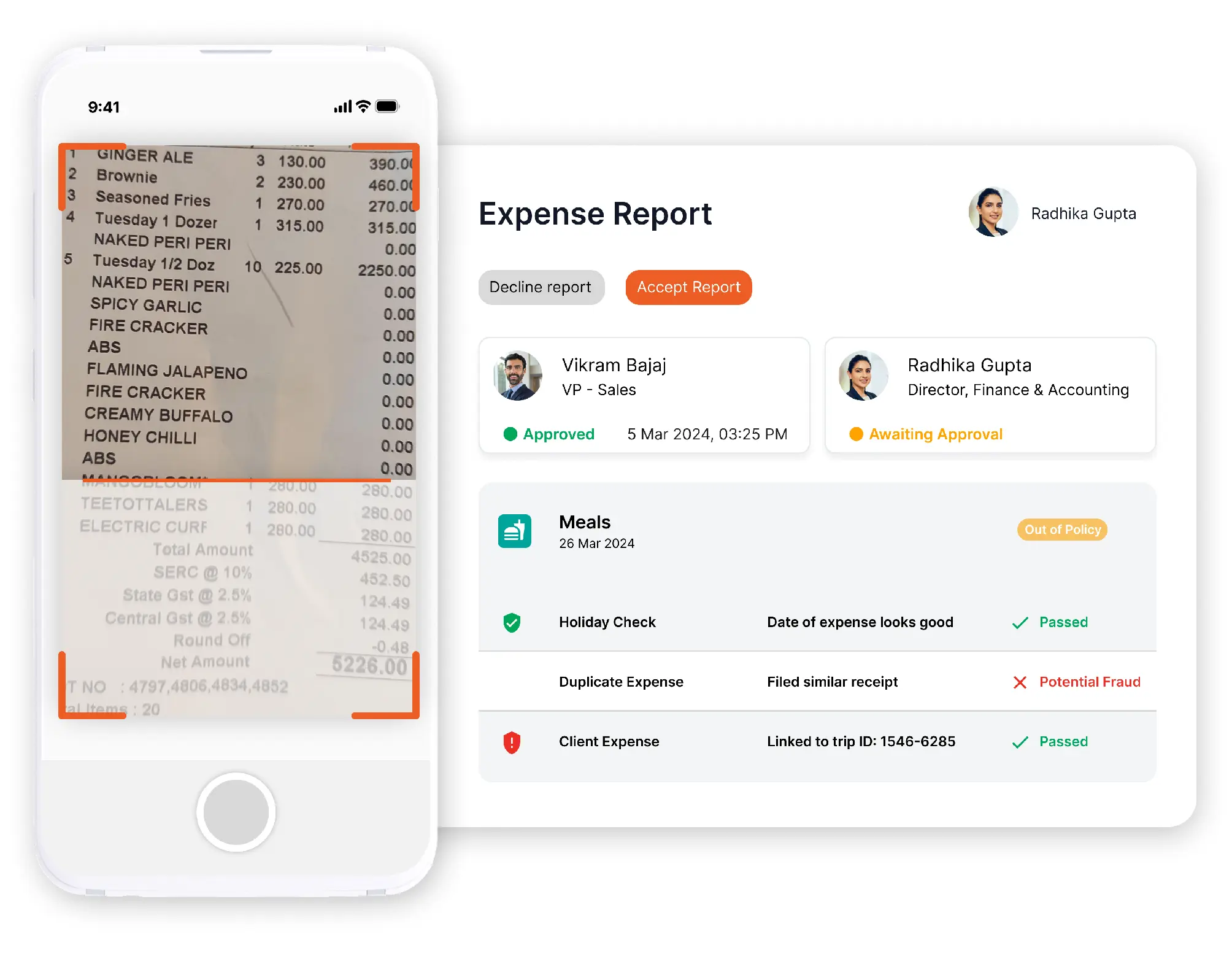
Complying with company policies and guidelines is crucial when it comes to expense reporting after business travel. It ensures transparency, accuracy, and accountability in financial matters.
Importance of Policy Adherence
Adhering to expense policies helps maintain the integrity of the company's financial processes and prevents any misuse of funds. It also ensures that all expenses are legitimate, approved, and properly documented.
- Avoiding Unauthorized Expenses: Employees should only claim expenses that are within the scope of the company's policy. This includes adhering to spending limits, eligible expense categories, and approved vendors.
- Accurate Documentation: Properly documenting expenses with receipts, invoices, and other relevant documentation is essential to support the validity of the expenses claimed.
- Timely Submission: Adhering to deadlines for expense report submission helps in maintaining the financial health of the organization and streamlining the reimbursement process.
Common Policy Violations and How to Avoid Them
- Missing Receipts: One of the most common policy violations is the lack of receipts for expenses. To avoid this, employees should ensure they collect and submit all necessary receipts for reimbursement.
- Exceeding Spending Limits: Employees should be aware of spending limits set by the company and avoid exceeding these limits without proper authorization.
- Non-Compliance with Approved Vendors: Using vendors that are not approved by the company can lead to policy violations. Employees should always check the list of approved vendors before making any purchases.
Final Summary
As we conclude our exploration of managing expense reports after business travel, remember to embrace the best practices and tools discussed to streamline your reporting process effectively. May your future travels be accompanied by effortless expense management!
Common Queries
How can I ensure compliance with company policies when submitting expense reports?
To ensure compliance, familiarize yourself with the company's expense policies, keep detailed records, and seek approval when necessary.
What are the benefits of using digital software for managing expense reports?
Digital software offers features like automated report generation, streamlined workflows, and easy access to data, enhancing efficiency and accuracy in expense management.
How can I categorize expenses effectively for streamlined reporting?
Start by organizing expenses into logical categories, use software tools for categorization, and ensure consistency in your classification methods for efficient reporting.



![[2025] Complete Guide to Corporate Travel Management - ExpenseIn Blog](https://tour.jakartainsider.id/wp-content/uploads/2026/04/corporate-travel-management-key-changes-trends-in-2024-120x86.png)